


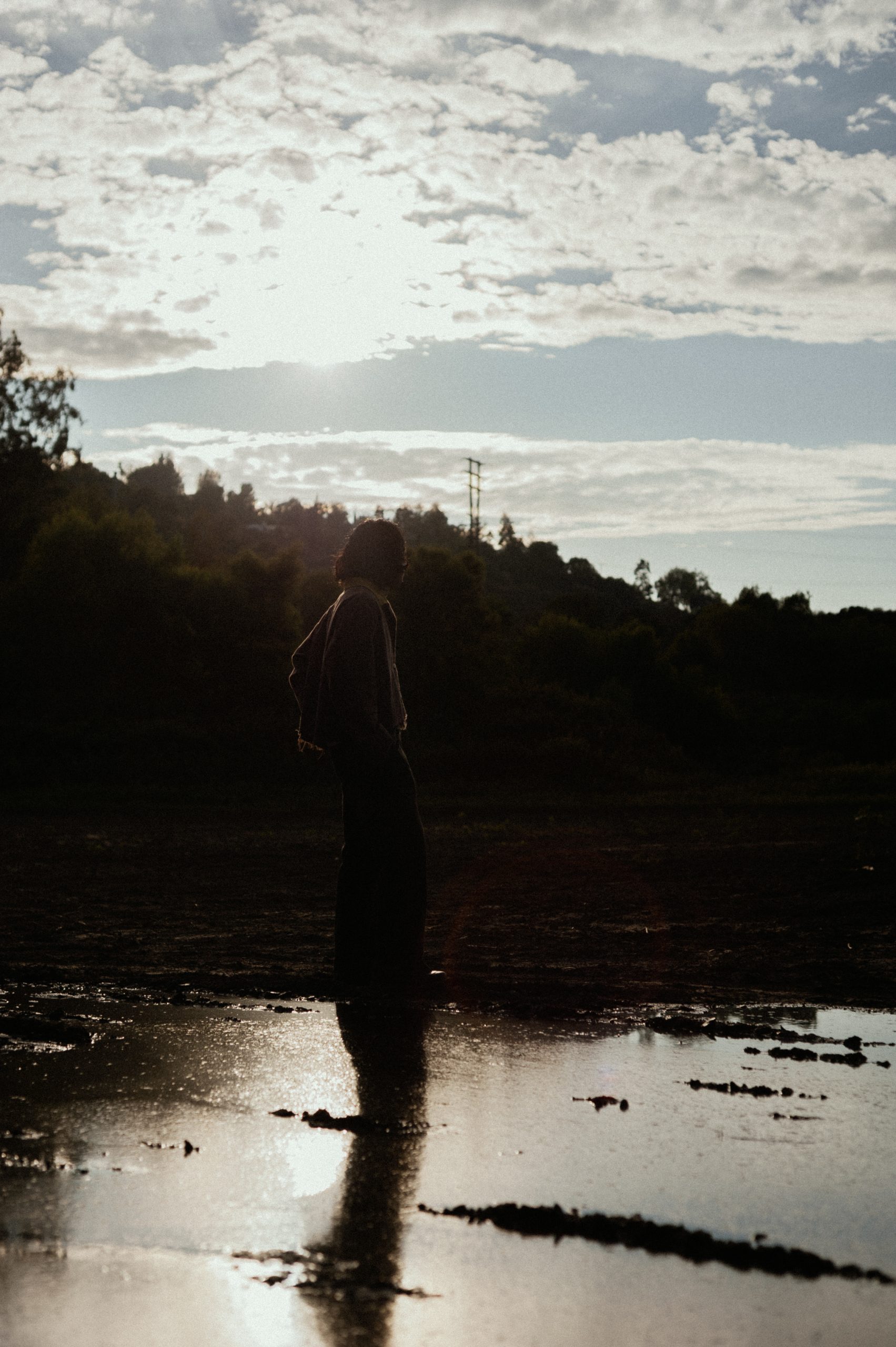
Lecx Stacy is a psychological, philosophical, and romantic artist whose work blurs memory, identity, and sound into something deeply personal. A first-generation Filipino American originally from San Diego and now based in Los Angeles, Stacy grew up immersed in music through karaoke-filled weekends, piano lessons, and early beat-making sessions taught by his older brother. After his brother’s passing, the equipment he left behind became a lifeline, transforming from mere tools into a medium for survival. By his early teens, Stacy was selling beats online, and by 18, he had begun shaping a singular voice, using production as a vital way to process grief, longing, and the complexities of belief.
His latest offering, “Safe In Your Hands, I Clasp,” is, in his own words, a soundtrack to his anxieties. The song explores the human tendency of clinging to idealized versions of life and love for comfort, only to feel that comfort slip further away as it is swallowed by noise and distortion. The track begins with raw, plucky acoustic guitar, subtle strings, and breathy, ethereal vocals that feel intimate, emotional, and effortless. Gradually, layered sounds and textures build into something fuller and all-encompassing, creating a swell of distortion and density before quickly falling back into its softer, stripped arrangement. That push and pull mirrors the song’s central tension, illustrating the moment where comfort inevitably gives way to overwhelm.

With this release, Stacy once again shows the breadth of his musical palette, offering something distinct from his previous work while remaining rooted in vulnerability and instinct. While previous singles like “Winter, A Wilted Flower” leaned into stillness and impermanence, and “With You, I’d Be Closer to God” embraced distortion and emotional intensity, this new chapter continues Stacy’s exploration of emotional extremes through dynamic shifts in sound and structure. Across his releases, his music remains grounded in vulnerability and belief, tracing the fragile space where love, faith, and desire intersect, proving that Lecx Stacy’s evolution is driven by instinct rather than industry expectation.
The album as a whole channels isolation and the weight of lived experience, refracting Stacy’s personal history into a kind of communal myth. Inspired by his father’s stories of “folkhouses” in the Philippines—bars where men sang American folk songs like John Denver after long nights of drinking—Stacy draws a direct line between that world and his own upbringing in Ramona, California. The result is a body of work suspended between landscapes, generations, and identities. This is Americana tinged with spectral echoes of Filipino ritual, rendered through his signature blend of emo-folk, folktronica, noise, and ambient textures.
On stage, Stacy has toured with artists like Eartheater, Jean Dawson, and Sega Bodega, bringing his recorded world to life with a visceral energy. His live performances are tense, devotional, and unflinching, mirroring the way his music treats memory as a form of distortion—fleeting moments carried forward, reimagined, and ritualized. Ultimately, Lecx Stacy’s work is not just music but philosophy in motion, serving as a profound study in longing, transcendence, and the fragile boundaries that exist between love, faith, and desire.
Follow Lex Stacy:
Subscribe to the hottest new podcast on YouTube. The Connected Podcast by The Chrd Magazine.















I like
Lecx is great
LS is an amazing artiste
Yes!!!