

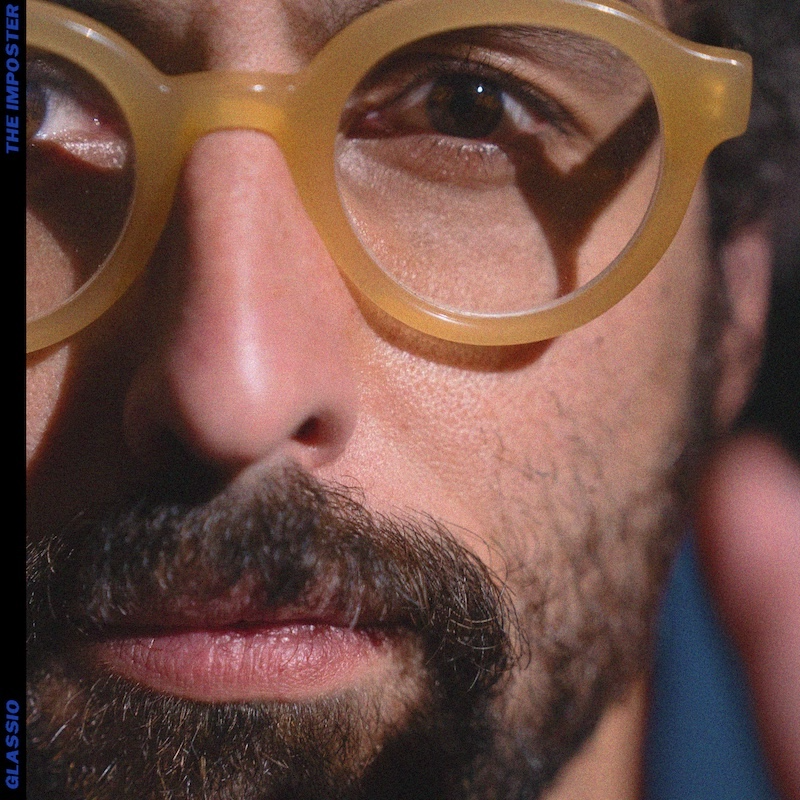
For the better part of a decade, Sam R.—the Irish-Iranian architect behind the moniker Glassio—has been a cornerstone of New York’s indie-electronic landscape. With over 25 million streams and a resume that boasts syncs on HBO, Netflix, and Amazon, he carved out a niche with a signature “melancholy-disco” sound that earned accolades from Rolling Stone México to The FADER. Yet, his third full-length record, The Imposter, suggests that beneath the shimmering synths and dancefloor-ready beats, a deeper transformation was brewing. This 13-track collection is less of a standard follow-up and more of a luminous meditation on identity, doubt, and the quiet, often painful act of returning to oneself after the music stops.
The genesis of the album is rooted in a profound period of upheaval: a transatlantic move from the frantic energy of New York to the gray-skied introspection of London, coupled with the clarity of newfound sobriety. These life-altering shifts have rendered The Imposter a self-portrait in motion, a dream-pop opus that trades the escapist spectacle of his earlier work for a much more intimate, sculpted vulnerability. While previous records drew favorable comparisons to the neon-drenched bliss of Hot Chip or M83, this new era finds Glassio inhabiting a raw, reflective register. It is a record born from a direct confrontation with addiction and the haunting fear of being forgotten, ultimately asking if an artist exists if they aren’t currently creating.

Sonically, the album moves like a lucid dream, weaving together threads of shoegaze, early-2000s electronica, and psychedelic folk into a rich tapestry where memory and melody drift in tandem. The journey begins in a state of disorientation with “Join the Club” and “Give Me Back My Future,” before spiraling through the relatable gravity of self-doubt in “I’m So Far Away” and “Downtown Hero.” Throughout the record, Sam R. navigates these heavy themes with a deft hand, ensuring that even the most introspective moments—like the spectral shimmer of “Al Pacino” or the pulsing nostalgia of “Heartstrings”—retain a sense of transcendent beauty. The album’s philosophical anchor, “Hit or Bliss,” poses a Rilkean challenge to the listener: if denied the right to create, would you still know who you are?
By the time the record reaches its conclusion, the tension that fueled the earlier tracks begins to soften into something resembling peace. The final track, “Take a Look at the Flowers,” features a radiant collaboration with avant-pop artist Madge and serves as the album’s collective exhale. For Sam, the song represents the moment the loop finally breaks—a realization that after all the searching and role-playing for the industry, the “real” voice was never lost, just waiting beneath the noise. The Imposter doesn’t just offer a collection of songs; it offers a different kind of faith—the belief that what is truly authentic cannot be performed, only lived. It is a triumphant reminder that a maker makes because they must, and in that realization, the mask finally falls away.
Follow Glassio:
Subscribe to the hottest new podcast on YouTube. The Connected Podcast by The Chrd Magazine.













never got into dance much but this song has a vibe! fr